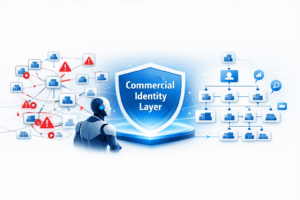













In the world of B2B data, the “Company Name” is a liar.
For decades, CRM managers have relied on company names to de-duplicate accounts. The logic seems sound: if a salesperson creates an account named “Bolt,” the system checks if “Bolt” already exists and merges them.
But in the modern global economy, this logic is causing data disasters. We have entered the era of the Homonym Trap. Companies are running out of unique names and choosing short, punchy nouns like Bolt, Bench, or Branch.
The result? Your CRM is likely merging unrelated businesses into “Frankenstein” accounts, confusing sales reps and breaking your territory reporting. The solution isn’t stricter name matching; it’s abandoning the name altogether in favor of the only reliable unique ID: the Website.
Once you have solved the identity crisis, you can finally trust your data structure. A clean identity layer is the absolute prerequisite for mapping complex account hierarchies in Salesforce without hitting Apex limits or creating circular errors.
💡 Definition: The Homonym Trap
In B2B Data Management, the Homonym Trap occurs when a CRM erroneously merges two unrelated companies because they share a common name (e.g., “Bolt” or “Delta”), resulting in corrupted revenue data and broken territory assignments.
1. The “Frankenstein” Account Problem: Bolt vs. Bolt
The most famous example of the Homonym Trap involves two “Unicorn” companies that share the exact same name but operate in parallel universes.
- The Fintech: Bolt (San Francisco). They focus on checkout experiences, and their digital home is
bolt.com. - The Service App: Bolt (Estonia). They are a ride-hailing giant competing with Uber, located at
bolt.eu.
The Data Risk:
If a US-based salesperson enters a lead for the “Bolt” checkout software, a name-based matching algorithm might merge it with the Estonian taxi company. Suddenly, your “Fintech” territory report includes revenue from European taxi rides.
bolt.com
bolt.eu
The cost of this error isn’t just bad data; it is lost revenue. When unrelated companies are merged into a ‘Frankenstein’ account, you create artificial territory conflicts that pit your own sales reps against each other.
The Fix:
A website-based match sees that bolt.com ≠ bolt.eu and correctly keeps them as two distinct unique records.
Comparison: Why Name Matching Fails vs. Website Matching
| Feature | Name Matching (Old Way) | Website Matching (The Delpha Way) |
|---|---|---|
| Primary Key | Company Name String | Domain Name (URL) |
| Unicity | Low (Duplicates common) | High (Global standard) |
| Risk | Merging unrelated companies (Homonyms) | False positives from dummy data |
| Hierarchy | Breaks easily (Orphans children) | Preserves accurate family trees |
| Best For | Mom & Pop shops (Local) | Global B2B Enterprises |
2. The “Extension” Crisis: Frame.io vs. Frame.com
Sometimes businesses are distinct, but the difference comes down to a tiny suffix. In the tech world, the .io extension is a badge of identity.
- The SaaS: Frame.io (
frame.io) is a cloud-based video collaboration platform. - The Retailer: Frame (
frame.com) is a company that does custom photo printing and framing.
The Data Risk:
A matching system that strips extensions—treating frame.io and frame.com both as just “Frame”—will cause immediate data collisions. In these cases, the website is the identity.
3. The Impact on Hierarchies (The Hidden Cost)
The stakes get even higher when you try to build Account Hierarchies. If you use name matching to determine the Ultimate Parent, you risk attaching a child company to the wrong family tree entirely.
Let’s look at the Bolt example again. The European ride-hailing company (Bolt) owns a subsidiary called Viggo, a Danish ride-hailing startup.
- The Name Match Failure: If you rely on names, you might accidentally attach Viggo to the US Fintech company simply because you matched it to the wrong “Bolt”.
- The Website Success: If you rely on websites, the system analyzes the digital footprint. It sees that
viggo.comshares patterns withbolt.eu, notbolt.com, and correctly places it in the ride-hailing family tree.
(Need help fixing your parent-child relationships? See the 5 rules of parentage in our RevOps Account Hierarchy Cheat Sheet.)
4. The Golden Rule: Trust the Domain
Why is the website the best unique identifier in Salesforce? Unlike company names, a website domain is globally unique, strictly regulated, and prevents the “Homonym Trap” of merging unrelated businesses.
The Website is the “Goldilocks” identifier for Sales and Operations:
- Unique: No two companies can own
bolt.com. - Available: 99% of B2B companies have one.
- Strict: It prevents the “Branch” and “Frame” confusion instantly.
To ensure data integrity, stop matching strings of text. Start matching domains.
5. The Catch: Validating the Key
Moving to a website-first strategy has one prerequisite: Data Quality. If the website field is empty or contains dummy data (like tbc.com or google.com), you create false links.
This is where Delpha Ultimate Accounts makes the difference. Delpha doesn’t just use the website to match accounts; it ensures you have the right website in the first place.
The “Triangulation” Method:
Delpha runs a rigorous verification process by cross-referencing the Account Website against the Email Domains of the contacts attached to it.
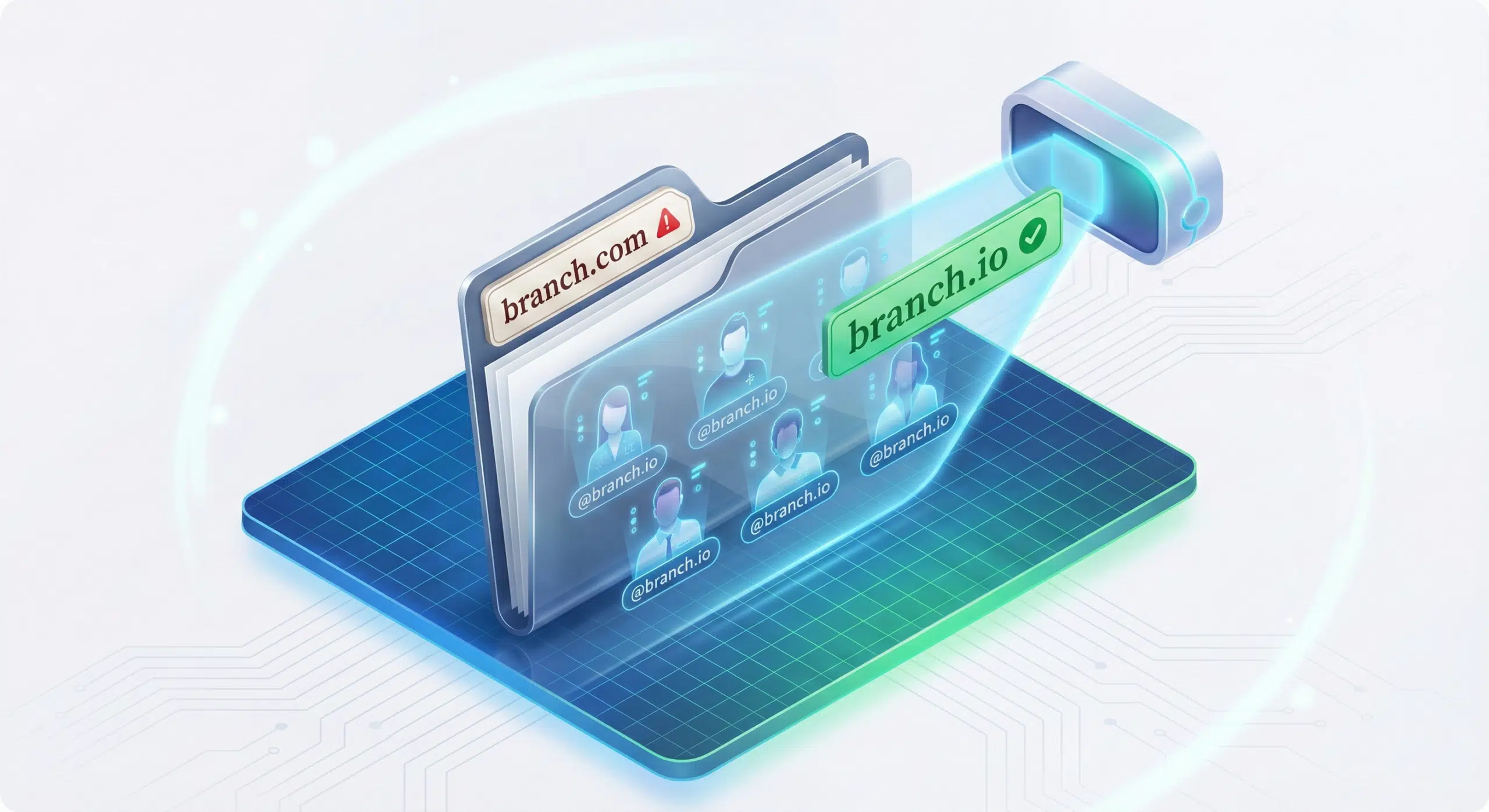
- The Scenario: An account is named “Branch” with the website
branch.com(Insurance), but all 5 contacts have emails ending in@branch.io(Tech). - The Fix: Delpha flags this discrepancy immediately and recommends changing the website to
branch.io. This ensures the account is placed in the correct hierarchy before it causes downstream chaos.
Manual cleanup is a losing battle in the age of global homonyms. The only way to scale is to implement automated B2B identity resolution that treats the Website URL—not the company name—as the unique identifier.
Is your CRM full of "Frankenstein" accounts?
Don't just trust the domain—verify it. Identify your Homonym Traps and fix your hierarchies automatically.